

Your Financial Services Firm Needs a Q4 Readiness Checklist
There is something impressive about how well families execute the back-to-school season. Backpacks are ready, bedtimes are adjusted and the route to school is planned
How AI-powered search is changing the way clients find accounting services, and what firms need to do about it.
A business owner needs a new accountant. Maybe their current firm isn’t handling things the way they’d like, maybe they’re growing and need someone who can keep up.
A few years ago, they’d have asked a colleague for a referral, or searched Google and scanned a few firm websites.
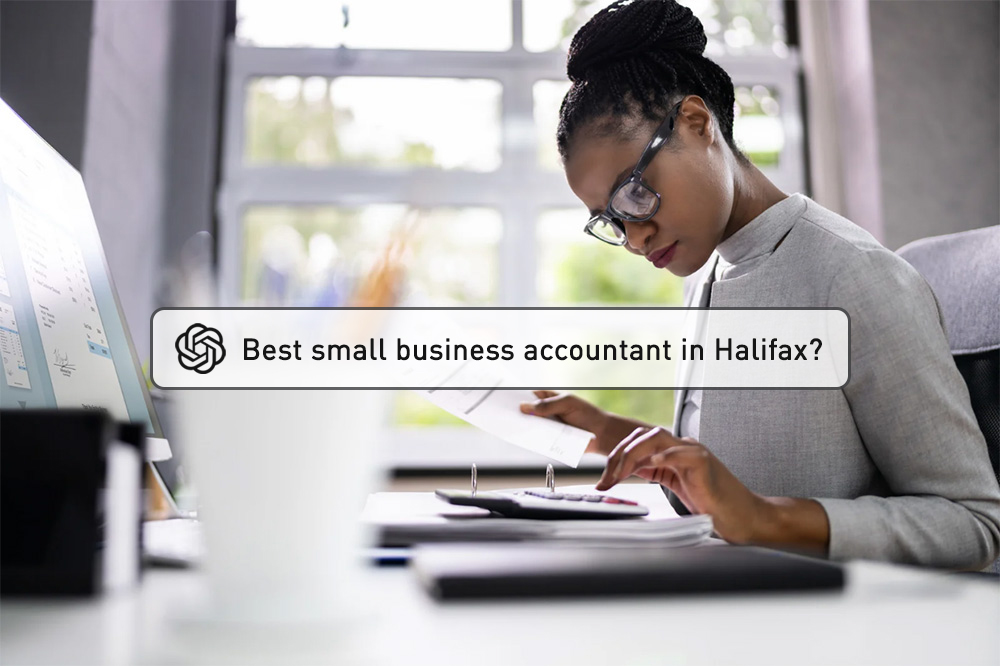
Today the search often starts differently. They open ChatGPT and type something like “who’s a good accounting firm for a small business in Halifax.” They glance at the AI Overview sitting above their Google results. Maybe they ask Perplexity to compare a few options. They take the first confident answer.
If your firm isn’t in that answer, you were never in the running. Not because your work isn’t good. Not because your reputation isn’t solid. Because the way clients search has changed, and most accounting firms haven’t changed with it.
The firms winning new clients through search today aren’t necessarily the most experienced. They’re the ones AI tools can find, cite, and recommend with confidence.
For years, ranking on page one of Google was the whole game. Show up in the top few results for the searches your clients were typing, and the phone would ring.
That’s not gone, but it’s no longer the whole picture.
When someone asks an AI tool a question, it doesn’t hand back ten links and let them pick. It synthesizes an answer and presents it directly. A short list, usually two or three names, gets mentioned. Everyone else is invisible to that conversation.
This is Answer Engine Optimization (AEO), structuring your online presence so AI tools can accurately understand, cite, and recommend your firm. It works alongside traditional SEO and Generative Engine Optimization (GEO), which covers the broader set of AI-generated content environments.
SEO gets you ranked. AEO gets you cited. If AI tools can’t confidently pull structured, authoritative information about your firm and your practice areas, they won’t recommend you — even if your Google rankings are strong.
SEO gets you ranked. AEO gets you cited. Most accounting firms have only invested in one.
None of these gaps come from doing bad work. They’re structural. Most firms built their online presence for the search engine era and never revisited it for the AI era.
Firms operating in both Atlantic Canada and the Toronto region often make the same mistake: identical content in both markets with the city name swapped out. AI tools, and increasingly clients themselves, can tell.
A Halifax business owner is looking for a firm that understands Maritime business culture and Nova Scotia’s regulatory environment. A GTA business owner is looking for a firm that can handle enterprise scale and knows the Bay Street landscape.
The fix: market-specific content that goes beyond the city name. Each market needs its own positioning and its own signals of local relevance.
A page that says “we handle bookkeeping, tax preparation, and audit support” doesn’t give AI tools enough to work with. It can’t confidently match that description to a specific client’s need.
The fix: content specific enough to answer the real questions a firm’s ideal client is asking. What does working with a multi-office CPA practice actually look like? How does a firm handle tax-season capacity? What’s the actual process for a security assessment? Specificity is what lets AI tools match content to a real query.
AI answer engines lean heavily on content that directly answers a question. Structured FAQ content is one of the highest-value investments a firm can make for AI visibility.
This isn’t about padding a page with thin content. It’s about answering the real questions prospective clients are asking: “How do accounting firms protect client financial data?” “What should I look for in an IT provider if I run a CPA practice?” “How do firms prepare for tax season without risking downtime?”
The fix: a structured FAQ section built around the actual questions accounting firms and their clients are asking, formatted so AI tools can read and cite it cleanly.
AI tools don’t only read your website. They pull from a network of third-party sources — legal directories, business listings, professional associations, review platforms, news references, and more. If your firm has inconsistent information across these sources, or is missing from key directories entirely, AI tools will have less confidence recommending you.
The Citation Pyramid isn’t built in a week. Firms that start now build a compounding advantage over firms that wait.
Firms that are invisible in AI search today are, in most cases, doing the same quality of work as the firms that do show up. The difference is structural, not a difference in expertise.
Once the four-part strategy is in place, market-specific content, service depth, FAQ infrastructure, and citation pyramid foundations, firms typically start appearing in AI-generated recommendations for their targeted queries within the first several weeks of the content going live. The deeper work, building out directory presence, accumulating reviews, and expanding thought leadership, continues after that, but the initial shift is usually measurable fairly quickly once the structural pieces are in place.
If you’re a partner or office manager wondering where your firm stands, here are four things worth checking this week:
AI search isn’t a future concern for accounting firms. It’s a present one. Clients are already using these tools to find accountants, and the firms showing up in those recommendations are capturing inquiries that never make it to a traditional Google search.
The good news: the structural work required is well-defined and doesn’t require a full website rebuild or a large ongoing content budget. It requires a clear strategy and consistent execution.
The risk of waiting: every month that passes is a month competitors have to build AI citation authority in your market first.
Nicom IT Solutions works with accounting and professional services firms across Halifax, Toronto, and the Atlantic region to build AI search readiness alongside traditional digital visibility.
We offer a no-obligation Digital Visibility Audit that shows you where your firm stands in AI search results, what the gaps are, and what it would take to close them.
Get a clear, actionable picture of how visible your firm is in AI search tools. We test your presence across ChatGPT, Google AI Overviews, Perplexity, and Bing Copilot for your core services and markets.
No obligation. No sales pressure. Just an honest assessment and a clear path forward.
Prefer to talk first? Call 1-833-231-6182.
There is something impressive about how well families execute the back-to-school season. Backpacks are ready, bedtimes are adjusted and the route to school is planned

If an unexpected disruption hit your firm tomorrow, would you handle it with confidence? You may assume the answer is yes, but many firms don’t

The California Gold Rush of 1848 promised one thing: opportunity. Hundreds of thousands of people headed west, hoping to strike it rich. Some found gold.