The IT Budget Mistakes Your Law Firm Will Not Notice Until the Bill Arrives

It is easy to feel confident about your IT budget in January. Everything is organized and approved, and you have a clear picture of what the next 12 months of technology expenses will look like. Now the firm can focus on files, filings and clients and not think too much about technology until the next budget conversation, right?

Suddenly, it is summer. Four laptops have failed, new associates and paralegals have pushed up your storage costs and somehow every software renewal has gone up 20% even though nothing new was added.

Then comes the inevitable question from the managing partner: “Why did nobody see this coming?”

It is one of the hardest questions for an IT provider to hear because the answer is usually, “You did know. Or you should have.”

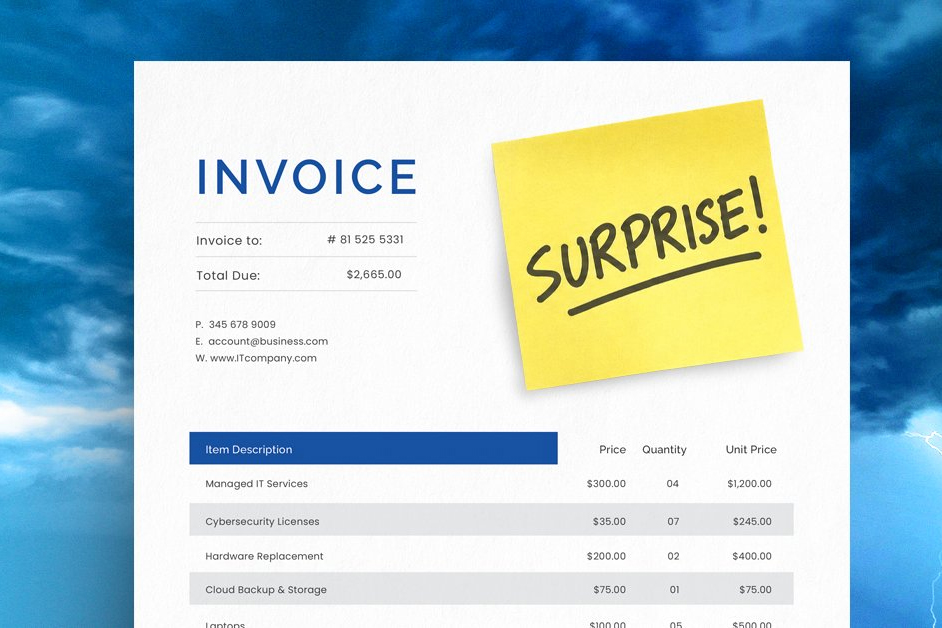
Surprise technology expenses are often predictable months before an invoice arrives. Here are four common budgeting mistakes that turn foreseeable, simple expenses into costly problems for law firms.

1. You Budget by Looking in the Rearview Mirror

The easiest and most mistake-prone budgeting strategy is looking at how much the firm spent last year and assuming next year will cost the same. It is simple, and past costs are a good starting point, but that is not forecasting.

A useful budget looks at where your firm is today and what it needs in the months ahead. Last year’s spending is a rearview mirror, not a road map. It says nothing about the associate starting in March, the second office you are considering or the practice management renewal coming due. Before you finalize a total, look at aging equipment, upcoming renewals, hiring plans and firm initiatives, then build the budget around what is ahead instead of what already happened.

2. "It Still Works" Is Your Replacement Strategy

Every firm has one computer. It is loud, the battery barely lasts an hour and even a large PDF is enough to make it stall and freeze. If you are the owner of this computer, you build habits around its failures, and you probably make sure it is still on the charger.

“It still works,” you say. But how long will it keep going when it is already on its last leg, and what happens if it gives out the week before a filing deadline or a hearing?

“It still works” is a very low standard for something your team needs to get anything done. When a struggling computer finally gives out, a planned expense becomes a race to replace it as quickly as possible, and that kind of speed is not cheap. It also means a lawyer or paralegal sitting idle while client work waits.

3. You Treat Renewals Like Autopilot

Autopay and auto-renewal are built into nearly every recurring cost these days. They save you from remembering another due date, but they also mean subscriptions stick around long after you meant to cancel them.

Just because a subscription is guaranteed to renew does not mean it should. You may no longer need it, may not know who is using it or may not be sure it is worth the money anymore. Put renewal reminders on the calendar and review each one before the auto-renew date.

You may find you are still paying for a cloud storage account belonging to someone who left the firm two years ago. That is more than an unnecessary expense. An account nobody is watching can still hold client files, which makes it a client confidentiality concern as well as a line item that no longer belongs in next year’s budget.

4. Your Growth Plan and IT Budget Have Never Met

One day in December there is a meeting on the schedule for “Next Year’s Firm Plan.” The week after, another meeting appears for “Next Year’s IT Plan.” Keeping these conversations separate leaves technology out of the firm’s growth initiatives and leaves whoever manages IT guessing about the direction the firm is heading.

New lawyers, a second location, hybrid and remote schedules all come with technology costs, planning needs and security considerations. If these conversations happen separately, the costs will meet on an invoice when you least expect it.

Bringing them together lets the firm plan for growth as one team. If you know where the firm wants to go, you can start estimating the technology needed to support it today and where it is headed next.

A Good IT Budget Should Not Have Surprises

When you can see replacements, renewals, security needs and growth-related expenses ahead of time, you can build an IT budget that works with your firm and gives you a realistic picture of what is coming in the new year.

The right budget cannot predict the future, but it can give you the fewest chances to say, “I did not see that one coming.”

What's Hiding in Your Firm's IT Forecast?

Want a clearer picture of what your technology expenses could look like next year? Schedule a Free Discovery Call and we will help you identify what may be on the horizon.

Prefer to talk first? Call 1-833-231-6182.

Share the Post:

Is Your IT Budget Missing Something?

Replacements, renewals and growth plans are predictable months before the invoice. Schedule a free discovery call to see what may be on your firm’s horizon.

Related Posts